An effective event invitation email can be the difference between a half-empty webinar and a sold-out conference. When the copy, design, timing, and automation work together, your invitation does more than announce a date. It builds interest and drives action.
In this guide, we’ll cover the key components of a great invite, share event email examples, show how to plan a full pre- and post-event sequence, and explain how to build and automate all of it in SendPulse.
Why event invitation emails still matter for businesses
Even with new marketing channels appearing every year, email remains one of the most reliable ways to promote events and turn interest into registrations. The reason is simple: people still engage with email, especially when the message is relevant and timely. Recent data support this:
- Recent benchmarks put average email open rates around 42% across many industries, with click-through rates around 6–7%.
- Expert analysis reveals that email subject lines that include words like “invitation” often perform even better, reaching open rates of up to 56.76% and click-through rates of about 4.34%.
These numbers show that audiences are still willing to open emails and take action when the message is relevant and well-timed, and the value is clear.

Free email marketing that scales
Use an AI assistant, pre-made templates, robust automation, and more to run impactful email campaigns without coding. Create your account and send up to 15,000 monthly emails at no cost.
Get started for free
An event invitation email announces an upcoming event, such as a webinar, conference, product demo, and others, and explains why it’s worth attending. This format works well for many event types:
- online events, including webinars, live demos, online summits, workshops;
- offline events like trade shows, meetups, conferences, and store openings;
- hybrid events such as conferences or festivals with both in-person and virtual tracks;
- product-focused moments, including launches, feature releases, and roadmap webinars.
Unlike a quick social media post, an email lets you explain the value, answer common questions (“Where is it? What time? What will I get?”), and follow up automatically based on each subscriber’s behavior. The template below shows how a well-structured invitation can do all of this while guiding readers toward registration.
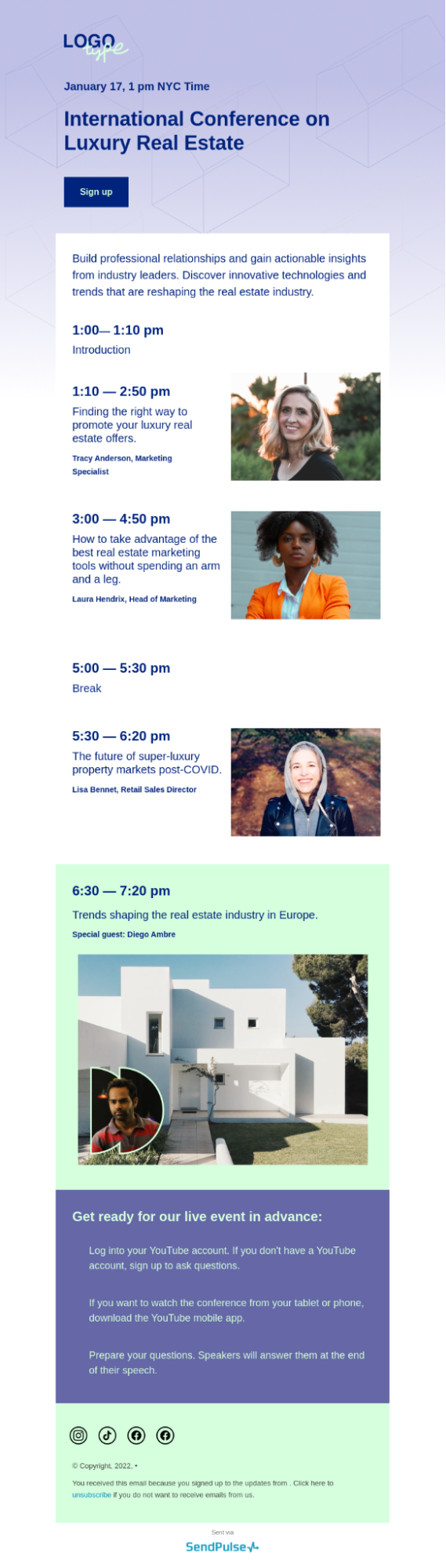 A standard email invitation example
Key components of a successful event invitation email
When building your event announcement email template, make sure it follows a clear, logical structure. Each component should move the reader one step closer to registering, from sparking interest to taking action. You can add, remove, or reorder them in your email builder depending on the event. This approach makes your emails easier to reuse, quicker to update, and more consistent across all your event campaigns.
Irresistible subject line
Your subject line decides whether your event invitation email gets opened at all. Data-driven studies suggest that personalization and thoughtful optimization can increase open rates by up to 26%, which is huge in event marketing, where each open can turn into a registration.
For event invitations, subject lines work best when they highlight value, not logistics. Instead of leading with the date or format, focus on what the reader will gain. For example, “Learn 3 strategies to boost your Q4 sales in our live session” clearly sets an expectation and gives people a reason to open. A more factual option like “Q4 sales webinar — March 21” provides information, but little motivation.
Here’s another example of a subject line that shows practical value:
 Example of an effective event email subject line
Strong subject lines tend to be specific. They point to a clear outcome, reference the event format, or speak directly to a relevant audience segment. This helps readers quickly decide whether the event is meant for them. Adding light urgency can also lift open rates as the event approaches. Phrases such as “Last seats available” or “Goes live in 3 hours” create momentum without feeling pushy.
It’s also important to think beyond the subject line itself. A well-written email preview text should naturally continue the message started in the subject to reinforce the main benefit or clarify what the recipient will gain by opening the email. Together, these two elements set expectations and move the reader closer to registration.
Because small wording changes can have a noticeable impact, testing different subject line variations is worth the effort. A/B testing helps identify which angle resonates most, whether it’s a benefit-driven message, a time-sensitive hook, or a clearer description of the event.
In SendPulse, you can run these tests directly in the email builder and use the built-in AI assistant to generate alternative versions, then refine the strongest option manually to match your brand voice.
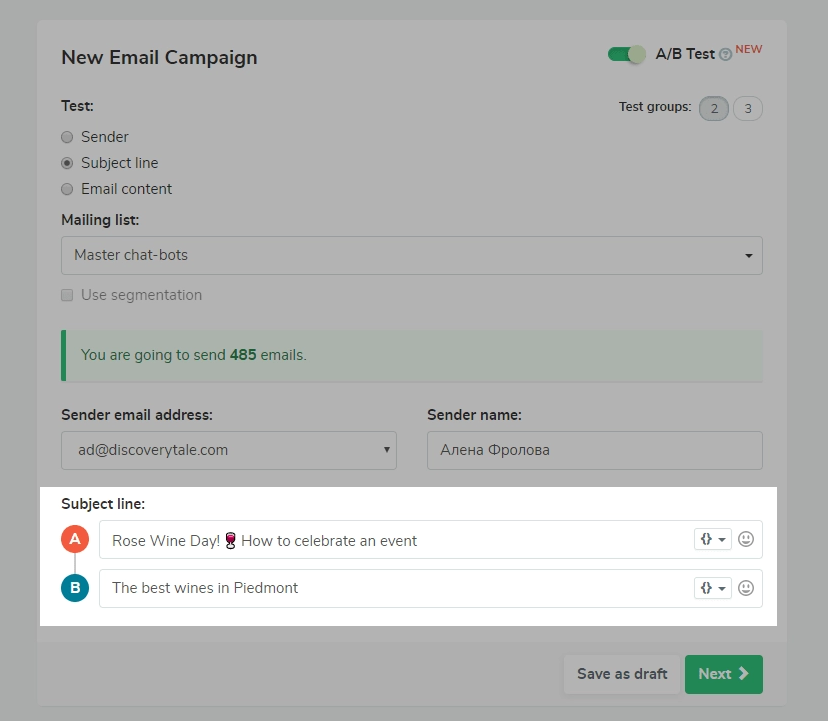 Example of email subject line A/B test
Recognizable sender name and personalized greeting
The sender name is one of the first things people notice when an email lands in their inbox. Before they even process the subject line, recipients check who the message is from and decide if it’s worth their attention. For event invitation emails, this moment is especially important, since you’re asking people to invest their time.
A clear, recognizable sender name helps set the right expectations from the start. This could be a real person tied to the brand, such as “Anna from BrandName,” a team identity like “BrandName Events,” or the company name itself. What matters most is consistency. Recipients should instantly recognize the sender and understand why the email is relevant based on past interactions.
 Example of a clear sender name
The sender address also reinforces credibility. Emails sent from a branded domain look more professional and reduce hesitation compared to generic or mismatched email addresses. Together, the sender name and business email address form the first layer of reassurance that the message is legitimate and worth opening.
Personalization inside the email body continues this trust-building process. A simple greeting using variables, such as “Hi {{Name}},” makes the message feel directed to a real person rather than a broad mailing list. You can set up these variables in most email marketing platforms, which allows you to personalize invitations at scale while keeping the tone natural and human.
Clear event hook
Once your subject line and sender name earn the open, the clock starts ticking. You have only a few seconds to show readers that the email is worth their attention. That’s the role of the event hook. It should answer one key question immediately: why does this event matter right now?
Effective hooks usually follow a few proven patterns. One common approach is to frame a problem that the event will help solve, such as “Stop losing leads between demo request and closed-won.” This type of hook works well when your audience is already aware of the challenge and is looking for practical guidance.
Another effective option is to highlight a clear opportunity, for example, “How to cut ad spend without sacrificing conversions.” Here, the hook appeals to growth or optimization goals and signals that the event will offer actionable insights rather than abstract theory.
A third approach is to emphasize exclusivity or format, especially for live or interactive events. Phrases like “Live teardown with Q&A” or “Invite-only workshop for eCommerce founders” set expectations about the experience itself and create a sense of urgency or special access.
Here’s an example of how a strong event hook works in practice:
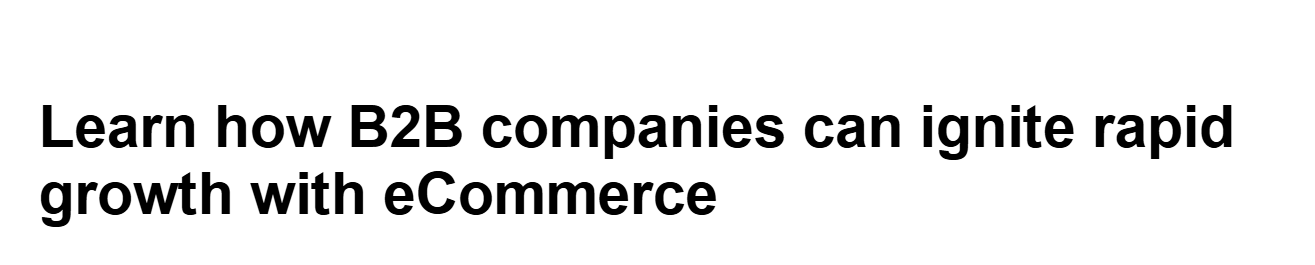 A clear headline that highlights the value of attending
To be effective, the hook should be positioned as a bold headline near the top of the email. Directly beneath it, add one short supporting sentence that clarifies who the event is for and what participants can expect. Together, this combination captures attention and qualifies your audience at the same time, guiding readers smoothly toward registration.
Essential event details
Once you’ve captured attention with a strong hook, the next priority is to remove friction. Even genuinely interested prospects may hesitate or drop off if they have to search for basic information or piece it together themselves. Clear, upfront event details help reduce uncertainty and make the decision to register feel effortless.
Friction kills conversions, which is why strong event invitation emails answer key logistical questions immediately. Start with what the event is by giving it a clear name and a one-sentence description that reinforces its value. This helps readers quickly understand what they’re being invited to and why it’s relevant.
Next, make when unmistakable by including the date, start time, and time zone. This is especially important for virtual events, where time zone confusion is one of the most common reasons people miss sessions. Just as critical is where the event takes place, whether that’s a physical venue or an online platform, ideally paired with a direct link so attendees know exactly how they’ll join.
Details about who is hosting or speaking at the event add another layer of reassurance. Highlighting speakers, hosts, or partners builds credibility and helps readers assess the quality of the content at a glance. Finally, clarify how to take action. The primary action, such as registering, saving a seat, or joining a waitlist, should be obvious and visually distinct.
To present all of this effectively, it’s best to group these details into a clear, scannable info block or “event card” instead of burying them in paragraphs of text. Many email builders offer pre-designed invite layouts with these elements already structured together, which you can easily adapt to your brand while keeping the flow intuitive.
Here’s an example of a clean event email layout that brings all essential details together without overwhelming the reader:
On-brand design and tone
Effective event invitation emails don’t need a complex design. What matters most is clarity. A clean layout helps readers quickly understand what the event is about, why it’s relevant, and what action to take next, especially when the email is opened on a mobile device.
Scannable structure plays a major role here. Clear visual blocks, concise headings, and short sections make it easy to skim the message while still capturing the core details. Consistent use of brand colors, logos, and typography reinforces recognition and trust, while good spacing and contrast ensure the email remains easy to read across devices.
High-performing event invites often follow a similar structure. They open with a bold title or hero image to grab attention, followed by a short value proposition and key benefits. A simple agenda or topic list helps set expectations without overwhelming the reader, and a prominent CTA button clearly signals the next step. Secondary elements like FAQs or contact details are usually placed in a lighter footer so they’re available without distracting from the main goal.
You can see these design principles in action in the event email template below.
Clear and compelling CTA
Every event invitation email should lead the user to one clear next step: registration. When multiple actions compete for attention, people hesitate or postpone the decision, which directly impacts conversions. A focused сall to action reduces uncertainty by making it immediately obvious what to do next.
CTA wording plays a critical role. Generic labels like “Submit” or “Learn more” rarely perform well because they don’t communicate value. Action-driven phrases such as “Save my seat,” “Register for free,” or “Book my ticket” clearly set expectations and reinforce the benefit of clicking.
Placement and visual hierarchy matter just as much as the copy. The primary CTA should appear near the top of the email, visible without scrolling. It can be repeated once later for readers who want more context before committing. Strong contrast, sufficient white space, and a clear button style help the CTA stand out and remain easy to tap on mobile devices.
This example shows how a single, well-positioned CTA guides readers toward registration without unnecessary distractions.
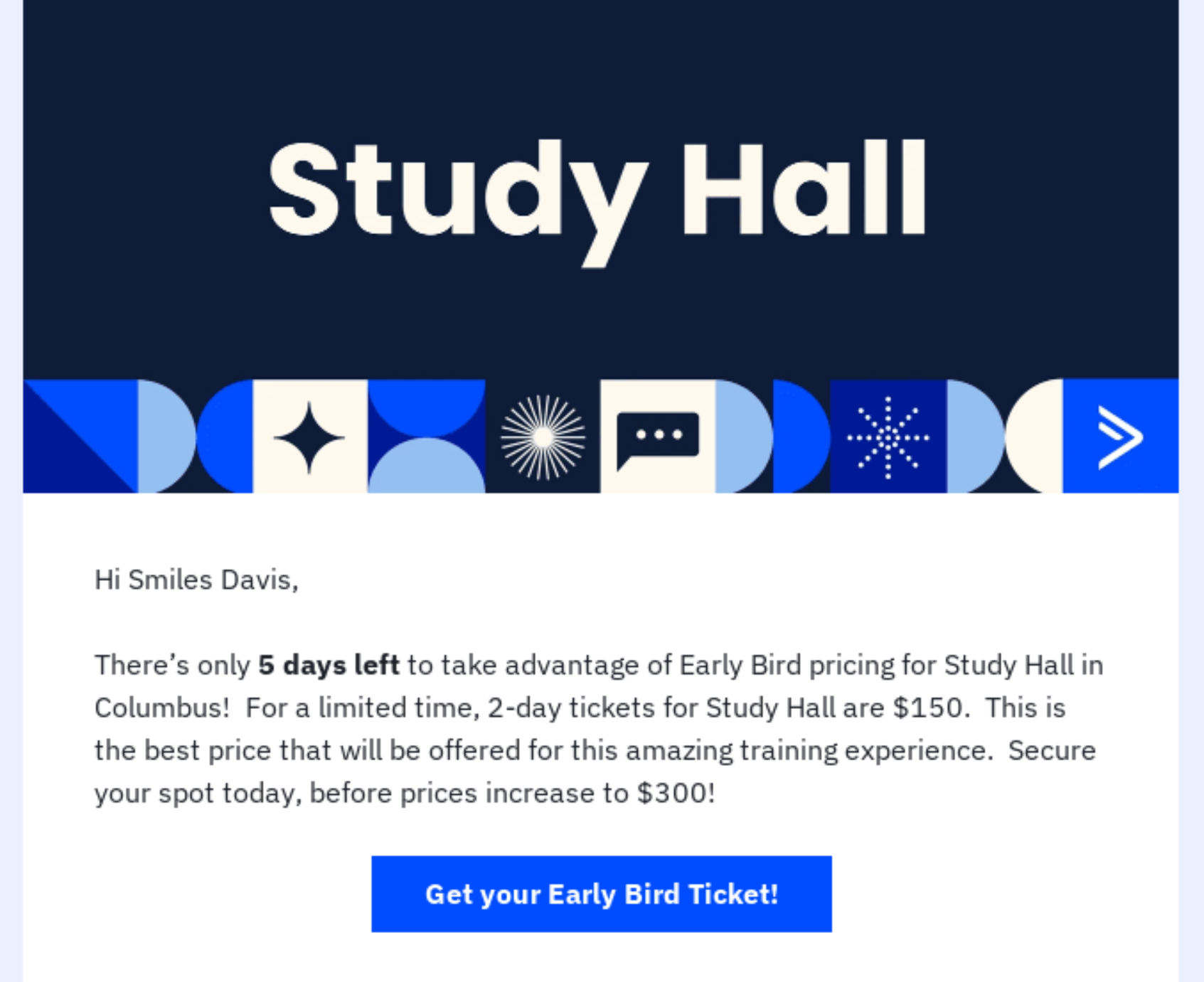 A clear, action-driven CTA placed prominently to encourage event registration; source: Really Good Emails
Effective event emails also account for what happens after the click. Most email platforms track CTA interactions and allow this behavior to trigger relevant follow-ups. For example, if someone clicks the registration button but doesn’t complete the sign-up, a reminder email can be sent automatically a few days later.
In SendPulse, this setup can be built using Automation by branching the flow based on CTA clicks and subsequent actions, making it easier to follow up with timely, behavior-driven reminders rather than sending the same message to everyone.

Turn conversations into conversions
Build targeted auto-flows with emails, chatbots, SMS, and more — powered by CRM data and real user behavior.
Get started for free
Helpful extras
High-performing event invitation emails often include a few supporting elements that help make the decision to register easier. While these details may seem secondary, they play a key role in encouraging attendance.
An “Add to calendar” link helps attendees save the event instantly and reduces no-shows, especially for virtual sessions where reminders matter most. A short FAQ section can also ease hesitation by addressing common questions upfront, such as pricing, session length, or whether a recording will be shared.
Social proof adds credibility and reassures readers that the event is worth their time. This can take the form of sponsor logos, a brief testimonial from a past attendee, or industry recognition. Together, these elements signal that the event is legitimate, valuable, and easy to attend.
Best practices for effective event email campaigns
A solid template is only the starting point. What drives results is the strategy layered on top of it. The same core structure works for a small workshop or a large virtual conference, but the way you apply it determines how many people register, attend, and stay engaged.
Mention attendance numbers or milestones
If your event already has traction, calling it out can build social proof and ease hesitation. Phrases like “Over 2,000 marketers registered last year” or “Now in its 5th edition” show that others have found value in attending, which makes new recipients more comfortable signing up.
That said, this approach works best when the numbers genuinely support your message. If you’re promoting a first-time event, it’s better to shift the focus away from attendance metrics and highlight other trust signals, such as speakers’ expertise, topic relevance, or session format. In those cases, credibility comes from who is hosting the event and what attendees will gain, rather than how many people attended before.
Highlight partners or sponsors
Partners and sponsors add another layer of credibility, especially for larger or industry-focused events. Recognizable brand names reassure recipients that the event is legitimate and well-supported. It also helps clarify the scope of the event, whether it’s a niche workshop or a broader, multi-track conference.
Keep the presentation simple. A clean horizontal block with partner logos and a short line like “In partnership with…” is usually enough to convey authority without pulling attention away from the core message. This section works best just after the event hook or near the main event details, when readers are deciding whether the event is worth their time.
Include testimonials and social proof
Testimonials are especially useful when you want to show what it feels like to attend your event. Short, specific quotes from past participants, such as “I left with three actionable insights I applied the next week”, help set realistic expectations and make the value more tangible.
You can also use screenshots of positive social media mentions, brief attendee quotes paired with their name and role, or simple star ratings from previous editions. These elements work best when kept concise and placed close to the CTA, supporting the registration decision at the exact moment readers are ready to act.
Segment and personalize for different audiences
Not all recipients value the same aspects of your event, and audience segmentation allows you to adjust the message based on who you’re inviting. Existing customers often respond better to advanced use cases, product deep dives, or roadmap discussions. New leads, on the other hand, usually need more context and educational framing that explains the core value of the event
Industry-based personalization can add another layer of relevance. An eCommerce marketer may be more interested in conversion-focused pre-event emails, while a SaaS professional is likely to care about lifecycle automation or retention strategies. Small tweaks to subject lines, agenda highlights, or examples can make the invitation feel noticeably more tailored.
VIP segments benefit from an even more intentional approach. This group may include high-value customers, long-term users, partners, or guest speakers. For these recipients, the CTA can move beyond standard registration to something more exclusive, such as “Book a 1:1 session with our experts” or “Join the private Q&A.” In this context, personalization isn’t about scale; it’s about signaling importance and strengthening the relationship.
Use multiple channels to reinforce your invite
Relying on a single email is rarely enough, especially for time-sensitive events. Strong campaigns use multiple channels to support different stages of the decision-making process. Email works best for the initial invitation and detailed context, while faster channels help reinforce reminders as the event gets closer.
A typical multi-channel flow often starts with an invitation email, followed by a confirmation email that includes a calendar link. A reminder email a few days later helps keep the event top of mind. As the date approaches, an SMS reminder can cut through inbox noise. For registered attendees, a chatbot message sent shortly before the event can deliver a direct join link and reduce last-minute confusion.
This progression moves from awareness to urgency in a natural way, using each channel for what it does best. SendPulse’s Automation tools let you combine these channels in one targeted flow. Just remember that text messages require explicit consent, and chatbot campaigns depend on active subscriptions in the chosen messaging platform.
Communicate with customers across multiple channels
With SendPulse, you can reach your target audience through a communication channel they prefer — be it email campaigns, web push notifications, SMS messages, live chats, or chatbots.
Get started for free
Prepare for no-shows and post-event follow-up
Not every registrant will attend your event, especially virtual ones, where average attendance often falls between 40% and 60%. This drop-off is normal and manageable if you plan for it in advance.
The most effective approach is to view attendance as a branching journey, not a single outcome. People who joined live can receive a thank-you message, session materials, or a relevant follow-up offer. Those who registered but didn’t attend can be sent a replay link, a short summary of key takeaways, or an invitation to an upcoming session.
Surveys also play an important role at this stage. Asking simple questions like “Which topic should we cover next?” or “What would make future sessions more useful?” keeps the conversation going and provides valuable feedback. Finally, soft sales CTAs, such as booking a free consultation or starting a trial, allow you to extend the value of the event without shifting abruptly into promotion.
Your event follow-up emails are where a single session turns into an ongoing relationship. That makes this stage just as important as the invitation itself, both for engagement and long-term results.
Event email examples you can learn from
By looking at real event email examples from well-known brands, you can see best practices in action and adapt them for your own event invitation campaigns.
B2B conference invitation
This invitation from Zapier, one of the effective conference email examples, demonstrates a classic speaker-driven layout often used in B2B conference emails. Instead of opening with lengthy descriptions, the email puts speakers front and center, immediately signaling the event’s credibility and depth. Recognizable names and clear job titles help recipients quickly judge whether the content is relevant to their professional goals.
The supporting headline reinforces the main benefit of attending, while the concise layout keeps the focus on expertise rather than logistics. The “See the agenda” CTA works particularly well here because it aligns with audience intent. At this stage, prospective attendees want to review session topics and assess value before committing to registration.
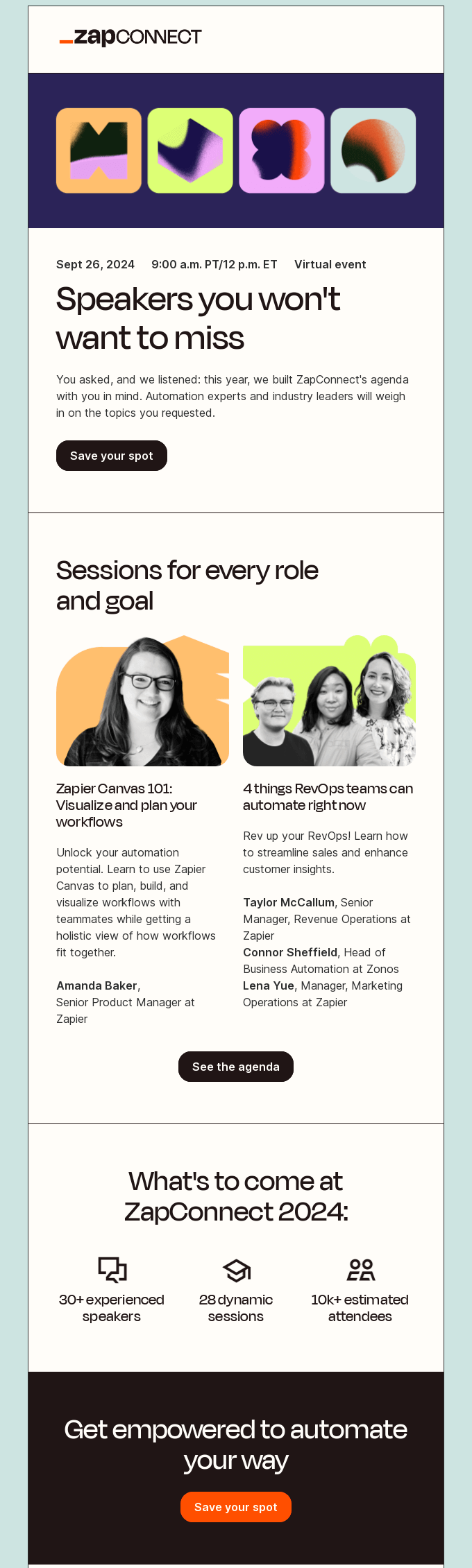 A speaker-driven conference invite highlighting experts and the agenda; source: Really Good Emails
Product launch or feature announcement invite
This product event invitation from Sonos shows how a launch email can function like a mini landing page, guiding readers through the event’s value before asking them to take action. The headline immediately teases exclusive access by promising a behind-the-scenes look, which sets expectations without revealing too much upfront.
A single, high-impact hero image anchors the layout and keeps attention on the product. Instead of overwhelming readers with details, the email highlights a few key benefits and clearly defines the format: “20-minute live demo + Q&A.” This immediately communicates both the scope of the event and the time commitment.
The CTA blends naturally into this flow by inviting readers to explore the launch rather than pushing an immediate commitment. Together, these elements create a clear, self-contained narrative that mirrors a landing page while remaining easy to scan in the inbox.
Because of its modular structure, this layout adapts well to other formats, such as webinars, roadshows, or local meetups, by swapping visuals and copy while keeping the same logical flow.
MAC takes this format into the retail space. The brand invites subscribers to book a complimentary 15-minute in-store appointment to experience their new spring collection firsthand. There’s no lengthy copy, no elaborate design — just a clear offer and a single CTA to book a slot.
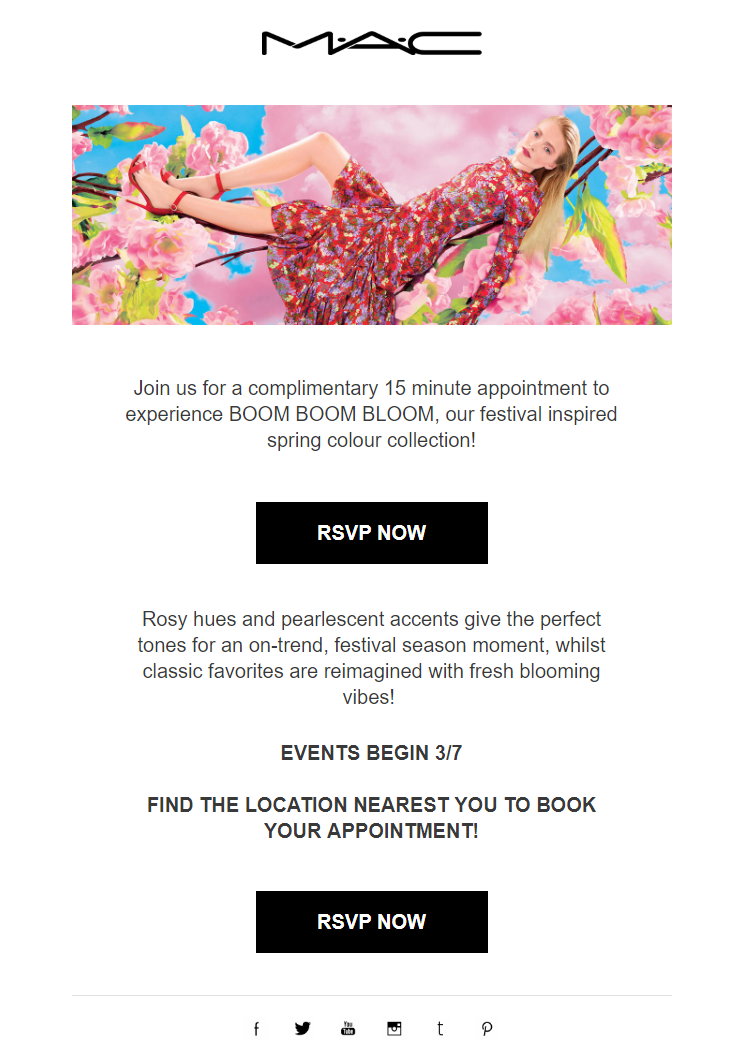 MAC invites subscribers to book a free 15-minute in-store appointment to discover the new spring collection
It’s a great example of how a product launch invite doesn’t have to be digital-only or feature-heavy to be effective. Sometimes, getting people through the door is the whole point.
Educational webinar series
This webinar invitation shows how educational brands promote recurring sessions without overwhelming the reader. Instead of treating each webinar as a standalone event, the email frames them as part of a consistent learning program, which helps build familiarity and long-term interest.
The opening hook focuses on a clear audience challenge, such as improving engagement metrics. By addressing a real problem upfront, the email quickly establishes relevance before introducing a concise agenda. Each session is described briefly, making it easy to scan multiple webinars and identify the most valuable ones.
Because this format is modular and repeatable, it works well as a reusable pre-event email template for ongoing educational campaigns. It allows teams to launch new webinar invitations faster while maintaining consistency across the entire series.
Community event or meetup invite
This community-focused invitation shows how local meetups and user group events can feel more like a personal invite than a marketing email. Instead of leading with credentials or promised outcomes, the message focuses on atmosphere and experience, setting a relaxed, welcoming tone from the first line.
The copy emphasizes how the event will feel: casual activities, shared interests, and an informal setting. This approach lowers the barrier to participation and makes the invitation feel approachable, even for first-time attendees. Visual elements reinforce the local context, helping the event feel familiar and relevant rather than abstract or corporate.
What stands out most is the conversational, inclusive tone. The language frames the event as a chance to connect, not something people need to “sign up for.” This works especially well for community-driven goals, such as encouraging repeat attendance, building relationships, or strengthening a local group around the brand.
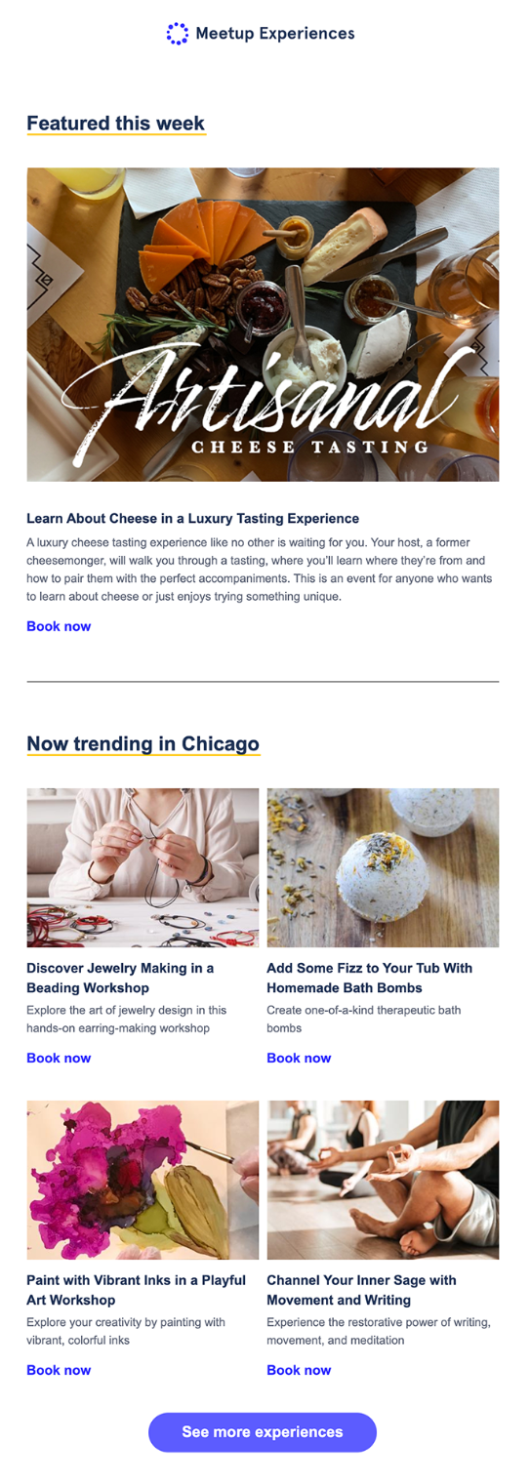 A community event invite using local cues and a welcoming, friendly tone; source: Really Good Emails
These types of event invitation email examples are a strong reference point when you want to humanize your brand and foster genuine connections instead of driving a hard sell.
Post-event email
This post-event email from Iterable shows how follow-up communication can keep momentum going after the live session ends. Rather than treating the event as a one-off moment, the message reframes it as the start of an ongoing relationship.
The message opens with a clear benefit: immediate access to session recordings. This works for both attendees who want to revisit key points and registrants who couldn’t join live. By offering the replay upfront, the email supports different user needs without drawing attention to attendance gaps, which helps keep the tone positive and inclusive.
The layout stays focused and easy to scan. Alongside the recordings, the email briefly explains what’s included and why it’s worth revisiting. It then naturally introduces next steps, such as exploring related resources, continuing learning on specific topics, or staying informed about future events. Throughout the message, the emphasis remains on usefulness and continuity rather than direct promotion.
This approach shows how a well-designed post-event email can reinforce value, maintain engagement, and smoothly guide recipients toward future interactions.
How to plan an event email series with SendPulse
A successful event campaign rarely relies on a single email. Instead, it unfolds as a sequence of messages that guide subscribers from early awareness to attendance and follow-up. Each step has a different goal, message focus, and level of urgency, and together, they form a cohesive journey.
Create your free SendPulse account
Start using powerful tools to attract, engage, and retain customers — all on one platform. Sign up for free and explore what you can build.
Get started for free
Below is a practical breakdown of how to structure this sequence, with examples of how each stage can be built in SendPulse.
At a minimum, an event email sequence usually includes:
- save-the-date teaser;
- main event invitation;
- reminder email(s);
- last-chance nudge;
- live-day reminder;
- thank-you email;
- follow-up and next steps.
With the automation builder, this sequence can be created as a visual flow triggered by a user action, such as a form submission, tag update, custom event, or email click.
Save-the-date teaser
The purpose of a save-the-date email is to announce the event early and secure a place in the subscriber’s calendar. At this stage, the goal is awareness and curiosity rather than immediate registration. Sending this message before schedules fill up increases the chance of later engagement.
Here’s how your email content could be:
- short headline – “Save the date: [Event Name] on [Date];”
- one-sentence value pitch;
- CTA buttons – “Learn more” or “Get notified when registration opens.”
In SendPulse, this flow can be triggered when someone joins an “Event interest” segment, for example, by clicking a teaser link, signing up for updates, or engaging with related content. Once they interact with the CTA, you can automatically tag them (sy, “Interested: Event X”), so they’re easy to target once registration opens.
Below, you can see an example of such segmentation in SendPulse.
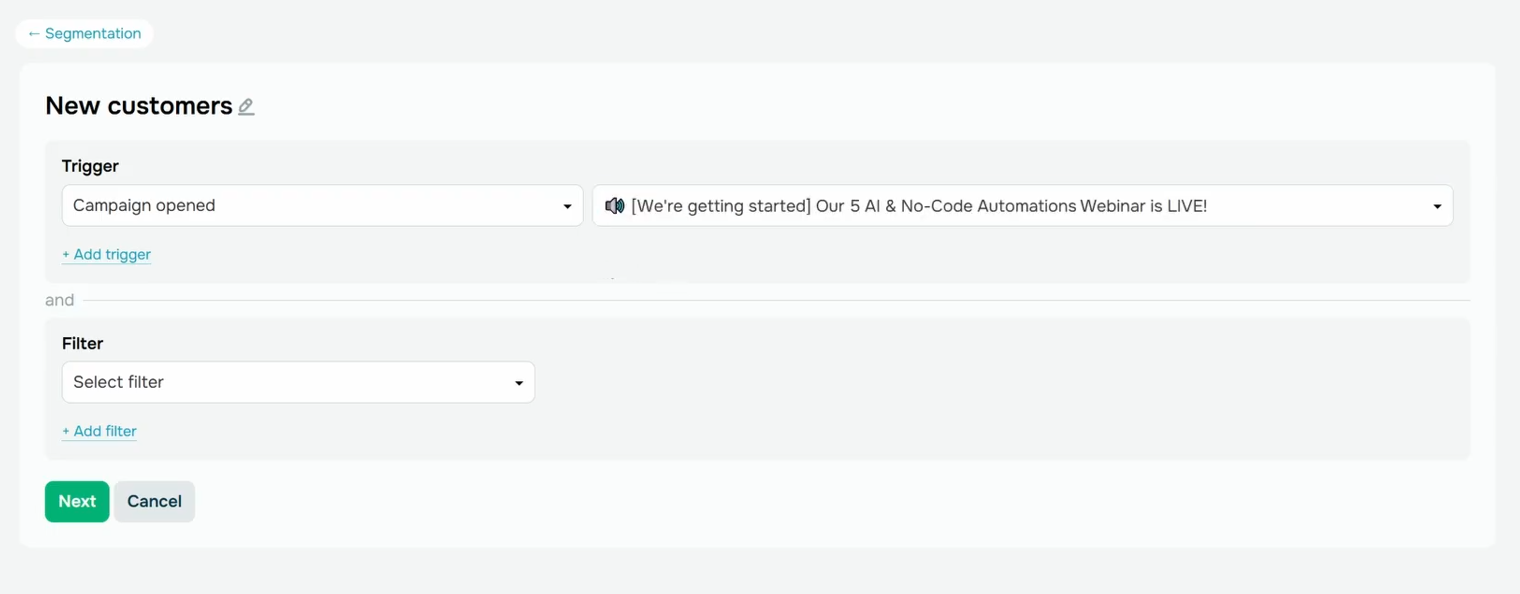 Segmenting subscribers based on event-related engagement to start a relevant flow
Official invitation email
This is the core message of your campaign. Interest has already been established, so the focus shifts to clearly explaining the value of attending and removing any remaining uncertainty.
Here’s how your email content could be:
- strong hook and value proposition;
- clear event details (what, when, where, who);
- primary CTA like “Register now;”
- optional “Add to calendar” link.
You can build this email using SendPulse’s drag-and-drop editor, assembling each section as a reusable block. Once finalized, save it as an event invitation email template so it’s easy to adapt for future events. The built-in AI tools can help generate or refine copy for headlines or benefit statements, which you can then edit to match your brand voice.
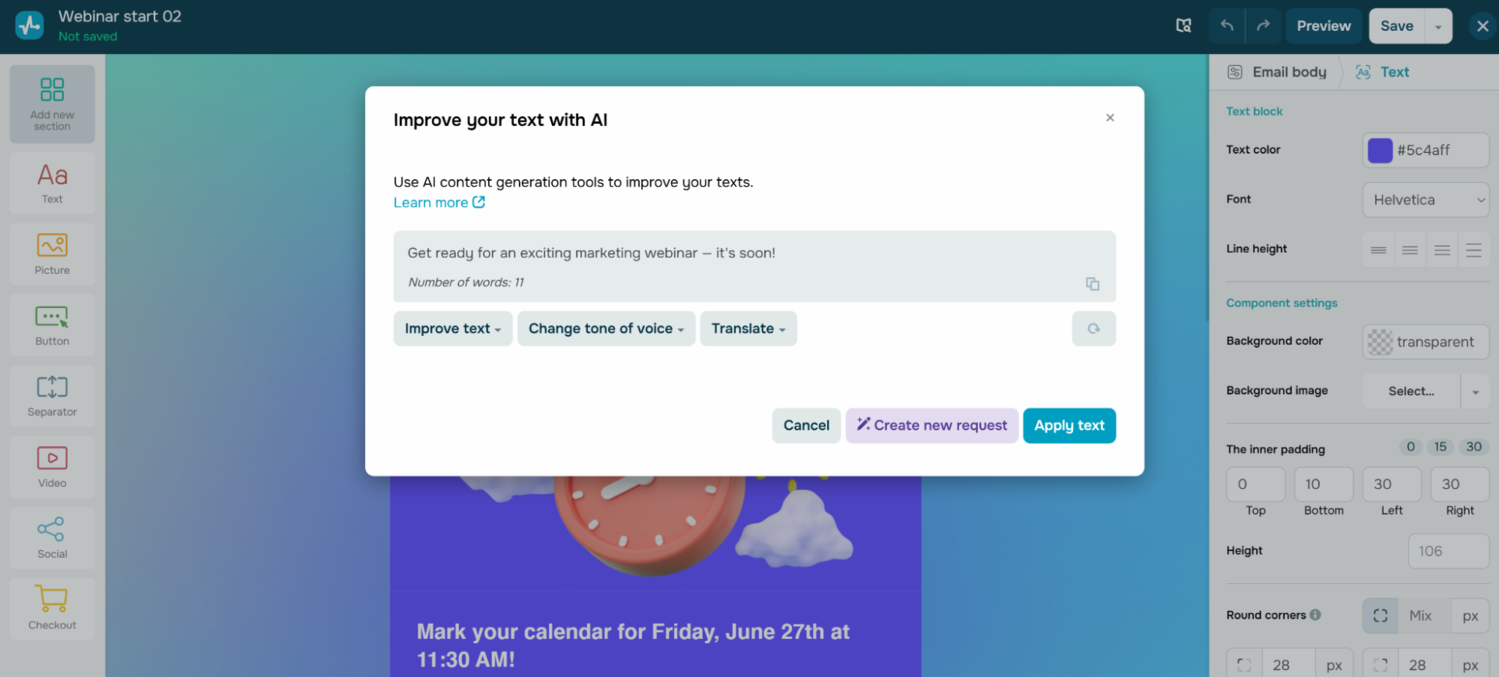 A reusable event invitation template built with the drag-and-drop editor
Reminder sequence and pre-event communication
Most people need more than one touchpoint to actually show up. Reminder emails help maintain momentum, reinforce the value of attending, and reduce last-minute drop-off as the event approaches.
Here’s how your email content could be:
- reminder 1 – “Spots are filling up — here’s what you’ll learn;”
- reminder 2 – “Starts tomorrow — add it to your calendar;”
- day-of reminder – “We go live in 1 hour — join here.”
In the “Automation” section, you can space these messages using “Pause” elements and personalize the flow with “Condition” blocks. For instance, subscribers who never opened the main invitation might receive a different reminder than those who already clicked the registration link. From a content standpoint, one upcoming event email template can serve as the base for all reminders, with only the intro text and CTA adjusted.
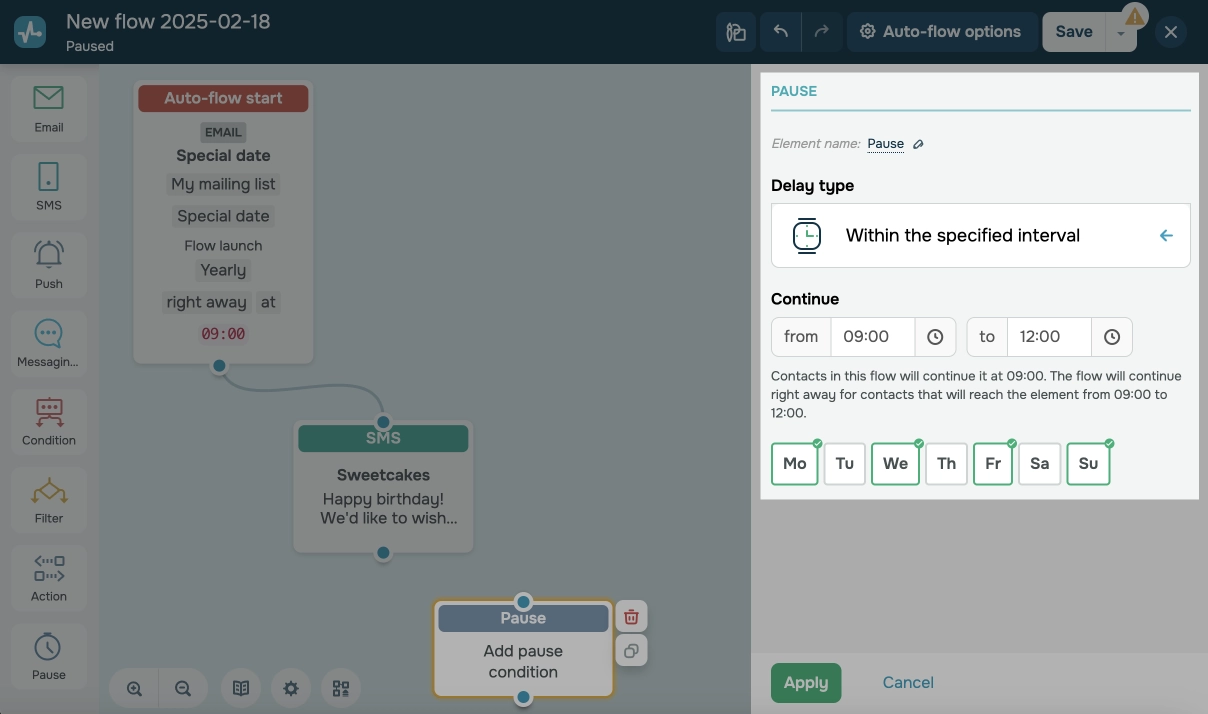 Automation flow with “Pause” elements
Multi-channel reinforcement with SMS and chatbots
As the event gets closer, immediacy matters more than detail. Multi-channel reminders help cut through inbox noise and ensure registered attendees don’t miss the session.
Here’s how your message content could be:
- SMS reminder sent 1–2 hours before the event;
- chatbot message with a direct join link.
SendPulse allows you to add SMS and chatbot messages directly into the same automation flow as your emails. A typical setup might include an email reminder a day before the event, followed by an SMS shortly before it starts, and a final chatbot message with a one-click access link. Just keep in mind that SMS messages require explicit consent, and chatbot messages depend on active subscriptions.
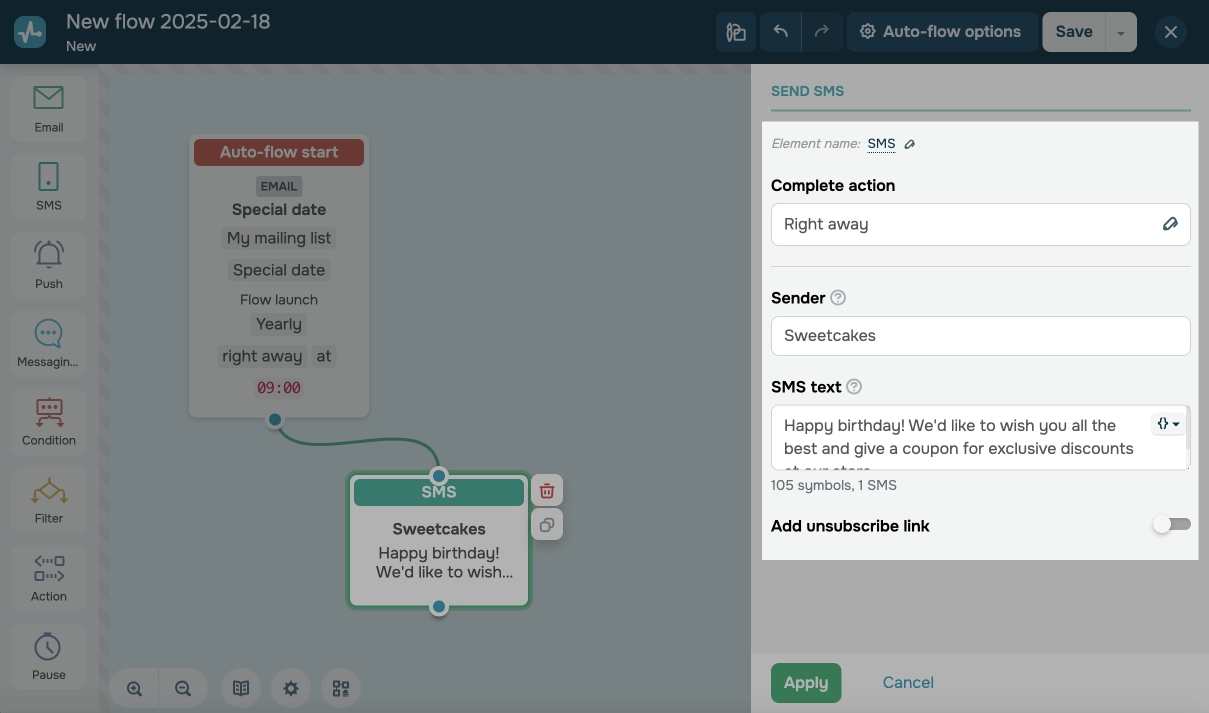 Automation flow combining email and SMS messages
Thank-you and follow-up flow
The event itself is not the finish line. Post-event emails help you extend the value of the session, reconnect with attendees and no-shows, and guide subscribers toward the next meaningful step.
Here’s how your email content could be:
- thank-you email with a replay link, slides, short note from the host;
- feedback email with 1–3 quick questions, optional incentive;
- nurture or sales email with the next event invite, free trial, relevant resources.
All follow-up messages can live inside one automation scenario. Using conditions such as “Attended / didn’t attend,” “Clicked replay,” or “Completed survey,” you can branch the flow and tailor the message accordingly. This allows you to treat follow-ups as a mini-funnel: starting with gratitude, moving into insight, and ending with a gentle next step.
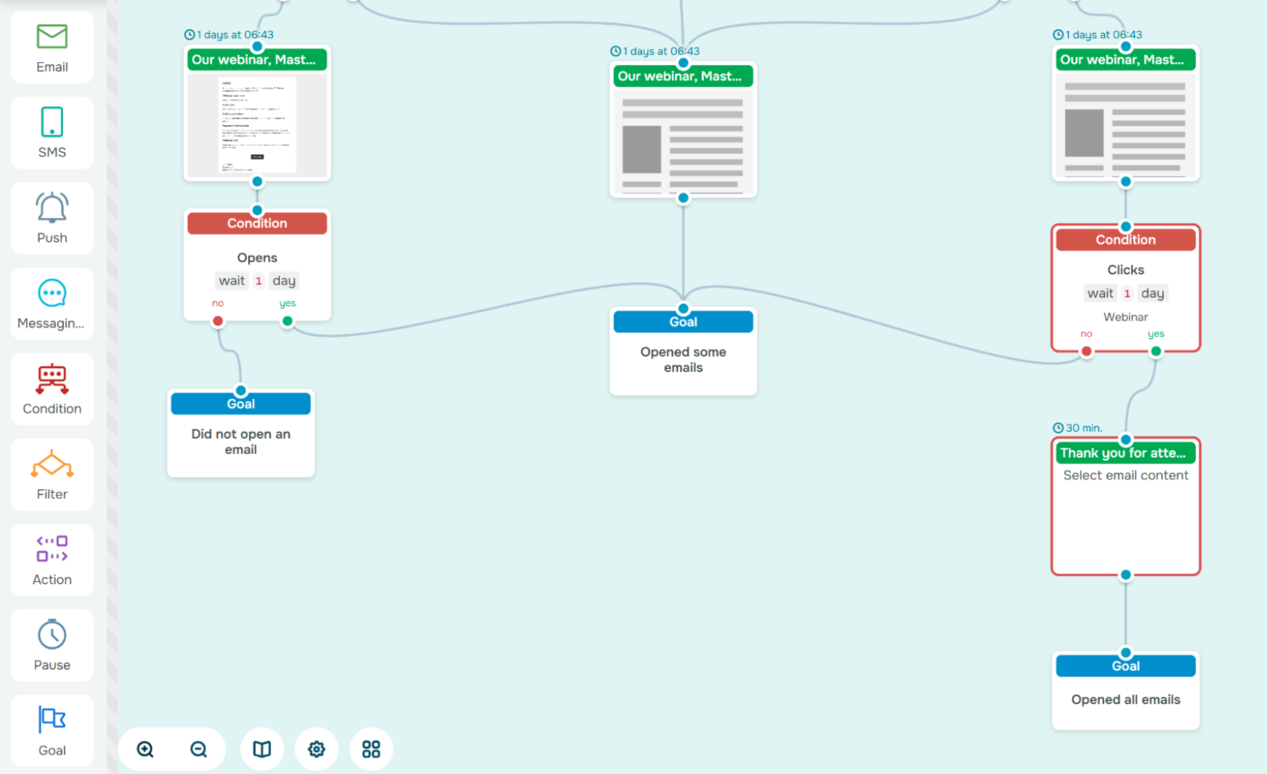 Post-event automation flow with multiple branches
Turn your next event into a repeatable, automated campaign
A successful event campaign goes beyond a single polished invitation. It relies on a structured series of messages that work together to guide people from interest to attendance and beyond:
- explains the value of your event;
- addresses common questions and removes uncertainty;
- delivers timely reminders as the event approaches;
- follows up with relevant content after the session ends.
When you combine a clear event invitation email structure, proven pre- and post-event email examples, and reusable templates with automation in SendPulse, each webinar, conference, or product launch becomes part of a repeatable process rather than a last-minute effort.
When you’re ready, log in to or sign up for your SendPulse account, create your first event invitation email template, and build an automation that will handle your next launch, meetup, or summit with far less manual effort.